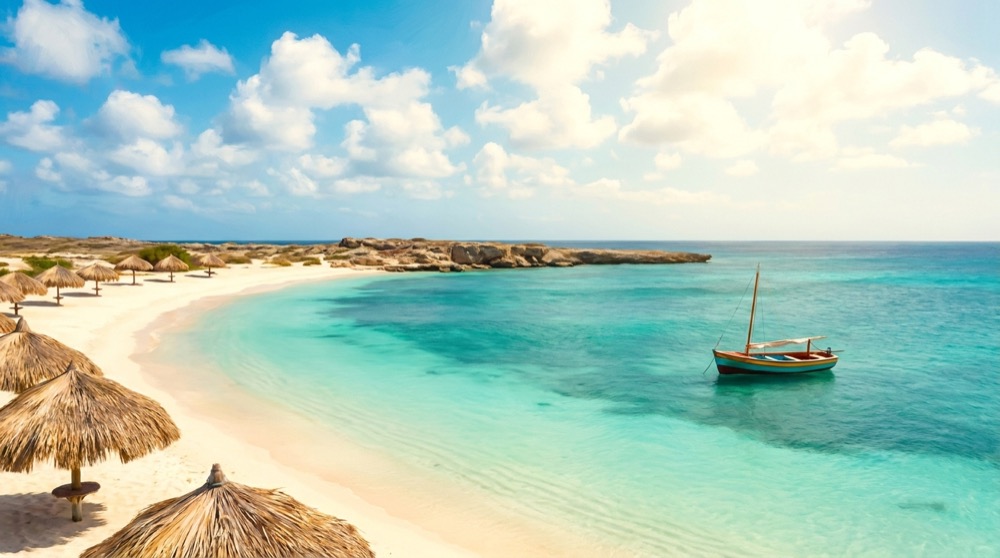
Baby Beach is the easiest swim in Aruba, with one exception that matters. This page covers the practical side: where to park and when, what the bathrooms cost, how to get shade, and exactly where the current turns dangerous. Read it once and the day takes care of itself.
Parking: free, and when it fills
The parking lot is a free, open sand lot directly behind the lagoon. No ticket, no attendant, no time limit. On weekday mornings it is close to empty and you park a few steps from the sand. On weekends it is a different beach. Local families arrive with coolers and grills and the lot fills by around noon. If you want the spots nearest the water, arrive before 10.
The quietest window is any weekday between opening light and about 11. After that, tour buses roll in.
Tour-bus timing
Most organized Baby Beach trips leave the hotel strip mid-morning and arrive between 10:30 and noon. For an hour or two the sand is busy, then they leave again around 2 or 3. If crowds bother you, either come early and leave when the buses arrive, or come after 2:30 for a calmer late afternoon.
Bathrooms, food and drinks
- Bathrooms: there are bathrooms, but they are paid. Bring cash and small bills. There is no ATM at the beach.
- Food: the Big Mama Grill does proper plates and cold drinks. A snack bar covers the basics.
- Lunch alternative: Kamini's Kitchen on the road between San Nicolas and the beach makes the island's best roti. It is closed on Tuesdays.
Chairs, umbrellas and shade
Beach chairs rent for about $10 a day. Umbrellas are free, first come, first served, and gone by late morning on busy days. Natural shade is thin at midday. If shade matters to you, arrive early or bring your own umbrella. Reef-safe sunscreen and a hat are not optional here.
Water shoes
From the parking lot the lagoon looks like one soft sandy bowl. It is not. Parts of the seabed are rocky and the knee-deep water hides it well. Water shoes make the walk out painless, and they matter most for children who run before they look.
Safety: the current at the lagoon mouth
Here is the part that is easy to miss on a calm day. Baby Beach is a lagoon closed off by a barrier built in the refinery era so that company families could swim safely. Inside that barrier the water is knee to waist deep and almost still. At the mouth, where the barrier opens to the sea, the picture changes completely.
Strong currents run through the gap and out past the rocks. On some days you cannot see them from the sand. One visitor review describes a swimmer who was pulled out through the mouth and had to be rescued. It happens, and it happens to people who thought they were still in the shallows.
Where not to swim
- The opening in the barrier. Do not swim through it, drift toward it, or snorkel into it.
- Beyond the rocks. Only strong, experienced swimmers belong outside the lagoon, and only on calm days with someone watching from shore.
- The inside edge near the mouth is where the snorkeling is best. Snorkel it, but keep the rocks on one side and check your position often. If you feel pull, swim back toward the beach straight away.
There is no lifeguard. If someone is in trouble, shout for help from the shore and do not go out after them unless you are a strong swimmer.
Kids at Baby Beach
This is a wonderful beach for children, as long as you set one rule: the lagoon only. Pick a spot well away from the mouth, on the side nearest the parking lot. Keep small children in water shoes. Expect them to be in the water for hours, and pack accordingly.
The San Nicolas and Baby Beach Day
Our narrated GPS audio tour ends on this exact beach. It drives you in from the hotel strip, walks you through 9 essential mural stops plus 5 extras in San Nicolas, then guides you past the red anchor and the lighthouse to Baby Beach, with a current-safety stop as you arrive. No app, works offline, one price for the car.
Rodgers Beach: the quiet alternative
Two minutes west of the Baby Beach lot is Rodgers Beach, officially called Nanki. It is a small, calm, local beach with fishing boats on the sand and almost nobody on a weekday. There are no chair rentals and no snack bar, which is exactly why it stays quiet. If Baby Beach is full or loud, this is where locals go. More in our Seroe Colorado and Rodgers Beach guide.