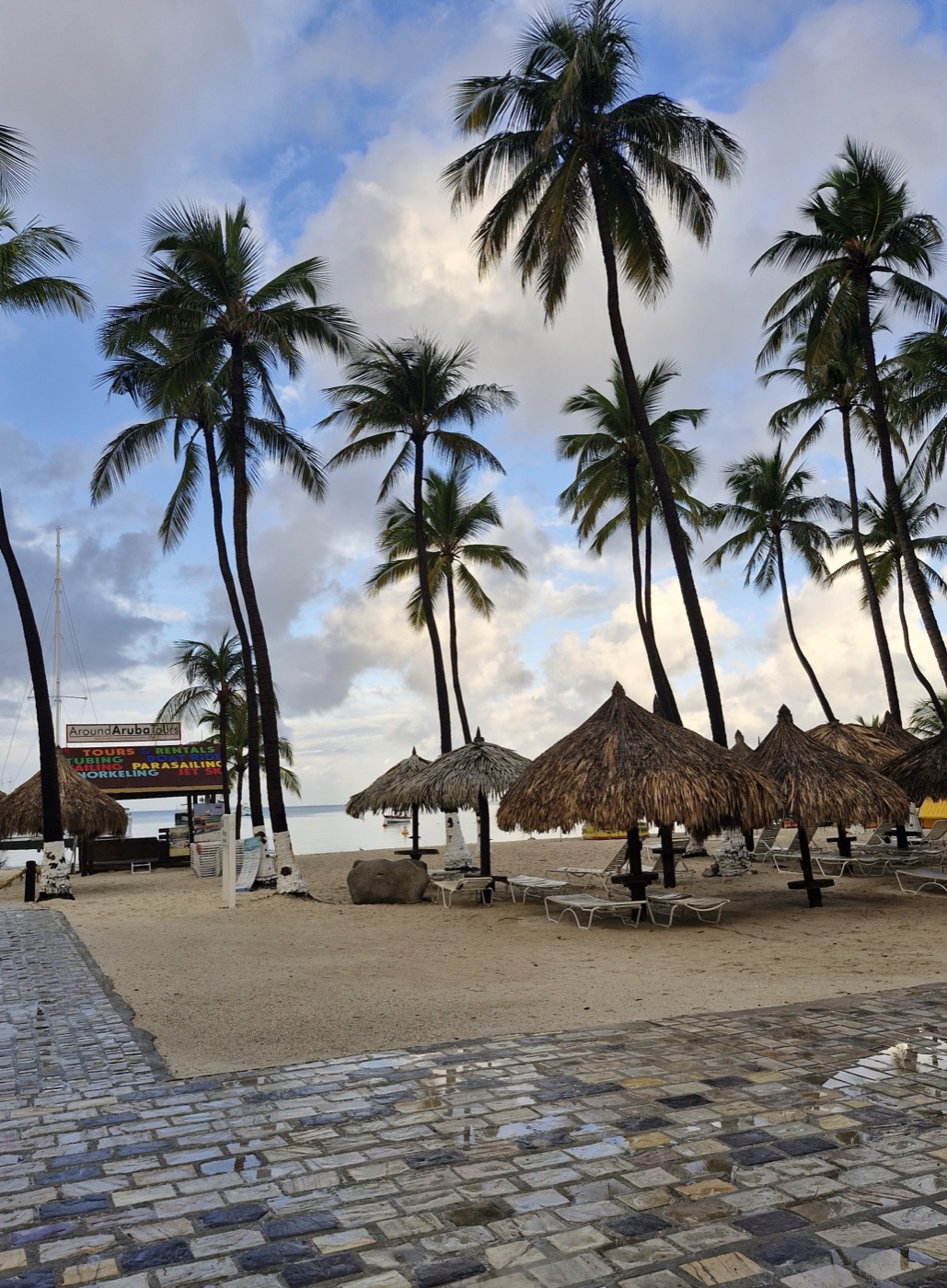
Here's the secret that makes Aruba planning easy: there's no bad month. The island sits outside the hurricane belt, gets roughly 360 days of sunshine a year, and the temperature barely moves — highs of 82–88°F (28–31°C) every single month, cooled by a constant trade wind. So "best time" really means best for you: prices, crowds, Carnival, or calm. Here's the honest breakdown from people who live in the weather.
The short answer
- Best overall: late April – June. Peak-season weather, post-peak prices, thinner crowds.
- Best value: September – early December. Hotel rates typically drop 30–50% below winter peak.
- Biggest party: late January – February, the heart of Carnival season.
- Family favorite: June – August. Warmest sea, school holidays, mid-range prices.
The seasons, honestly
- December – April (high season): the classic escape-winter window. Gorgeous, dry, breezy — and the busiest and priciest months of the year. Book hotels and restaurants well ahead.
- Carnival (January – February): Aruba's biggest cultural event builds from early January to the grand parades before Lent. Music, costumes, street parties — worth planning around if you love a festival, worth knowing about if you don't.
- May – August (the underrated stretch): same sun, warmer sea, fewer people, fairer prices. June brings the strongest trade winds — kite-surfer heaven, and nature's air conditioning for everyone else.
- September – November (low season): the quietest and cheapest months. Winds are calmest (it feels hottest), showers get slightly more frequent — short and often at night. If you want the island nearly to yourself, this is it.
Month by month
- January: perfect dry-season weather, peak crowds and prices. Carnival begins.
- February: Carnival's grand finale — the island's most vibrant (and most booked) month.
- March: high season continues; spring-breakers join the snowbirds.
- April: the turn — after Easter, crowds thin and rates start sliding. Great value begins.
- May: quiet, dry, warm. One of the best-kept-secret months on the island.
- June: windiest month — cooling breeze everywhere; families begin arriving.
- July – August: family season. Hot, breezy, warmest ocean, minimal rain.
- September: calmest wind, hottest feel, lowest crowds and prices. Play mornings, pool afternoons.
- October – November: cheapest window continues; brief showers pass quickly, usually at night.
- December: quiet early month, then the holiday surge — the most expensive two weeks of the year.
What this means for exploring
Whatever month you pick, the same daily rhythm wins: mornings and golden hour are for exploring; midday is for water and shade. That's exactly how our quests are built — The Secrets of San Nicolas is best played in the cool morning when the murals glow, and Mr. Pineapple's Treasure Hunt on Palm Beach shines early morning or in the last 90 minutes before sunset. And because they're self-guided with links valid for 12 months, there's no tour schedule to match to your season — pick your beach, pick your morning, play.
Frequently asked
Best month overall? Late April through June — high-season weather at shoulder-season prices.
Hurricanes? Aruba is outside the hurricane belt; direct hits are extremely rare.
Cheapest time? September to early December — often 30–50% off peak hotel rates.
Rainy season? Oct–Dec, but "rain" means short passing showers on an arid island, not washed-out days.
Whenever you come, the island's ready
Two self-guided story quests, no schedule, links valid 12 months — buy now, play any morning of your trip.
The Secrets of San Nicolas Mr. Pineapple's Treasure Hunt